





Waxy whisky refers to mouthfeel and texture rather than flavour alone. Instead of feeling light or fleeting, waxy whiskies are coating, weighty and persistent on the palate, lingering long after you've swallowed. When people ask 'what is waxy whisky', they're really asking how a whisky behaves in the mouth - how it carries flavour, how it feels neat or with water, and how long it sticks around. Waxy whisky is defined by structure and presence, offering a tactile experience that shapes the entire drinking moment rather than just the taste.
-1x1-2024.jpg?v=1768315927175&transform=resize=600)
WHAT DOES 'WAXY' MEAN IN WHISKY?
In whisky terms, 'waxy' is best understood through physical comparison rather than flavour description. Think candle wax warming slightly between your fingers, beeswax polish, or soft paraffin - smooth, dense, and gently resistant rather than slick or watery. This sensation often arrives before flavour registers, shaping how the whisky spreads across the tongue and cheeks.
Importantly, waxy does not mean sweet, smoky, spicy or oak-heavy. It is not a flavour category and it isn't about intensity of strength. Instead, waxiness is about how the whisky moves and stays in the mouth. When people talk about whisky texture explained, waxy character describes that mid-palate grip and the way the whisky remains present on the finish, even as individual flavours begin to fade.
WHY IS SOME WHIKSY WAXY?
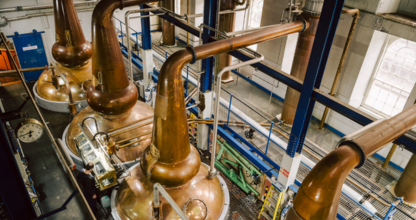
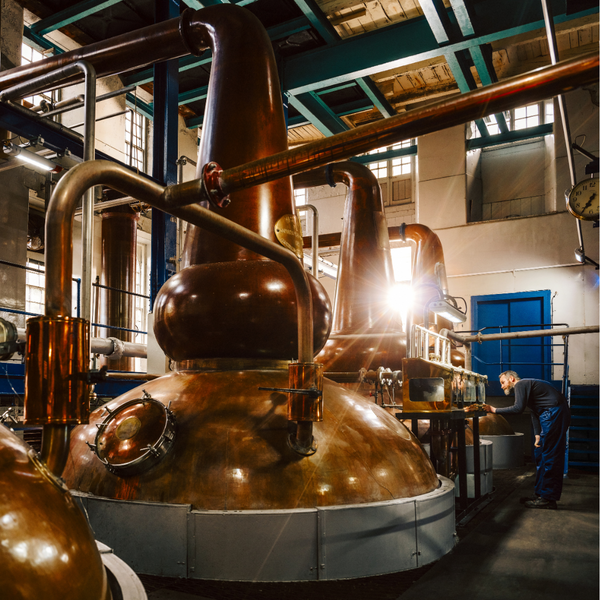
Waxy texture is not added or engineered - it is a natural outcome of production choices made during fermentation, distillation and filtration. At Deanston, we're known for production processes that naturally preserve mouthfeel. Longer fermentation times allow more complex compounds to develop, and the shape of the stills - combined with slower distillation - helps retain weight and texture in the spirit. The method of processing spirit in the still house can increase the presence of certain compounds that increase the waxy texture, which includes our low wines and feints receiver.
WHAT IS A LOW WINES AND FEINTS RECEIVER?
At Deanston, waxiness isn't accidental - and the feints receiver plays a quiet but important role in that texture. In simple terms, the feints receiver is where the heavier parts of the spirit run - known as feints - are collected during distillation before being reintroduced into the next distillation cycle. These feints contain many of the heavier, oilier compounds that influence body and mouthfeel.
Deanston's approach allows these feints to remain part of the spirit's journey. By carefully managing how feints are collected and reused, the distillery preserves the natural oils and weight that give Deanston its signature waxy texture. This consistency ensure that the spirit retains structured, viscosity and grip - qualities that define how Deanston whisky feels on the palate long before flavour takes centre stage.
In short, the feints receiver helps maintain continuity and character, allowing those desirable compounds to build over time rather than being lost. It's one of the less talked-about details of distillation, but at Deanston, it quietly underpins the waxy mouthfeel our distillery is known for.
CONGENER COMPOUNDS
At the heart of waxy are congeners, such as fusel oils, fatty acids, esters, originally created during fermentation and carried through to distillation. These compounds add flavour along with contributing to viscosity, weight and that distinctive buttery coating sensation. When retained an concentrated over time, they allow flavour to unfold more slowly and linger longer, giving waxy whiskies their trademark persistence. The compounds undergo changes through the distillation process which further change the structure, moving from purely flavour producing congeners to further waxy promoting compounds.
LONG FERMENTATION AND SLOW DISTILLATION
Longer fermentation encourages the formation of these complex compounds known as congeners, such as higher alcohols and esters, that go on to influence mouthfeel rather than aroma alone. When paired with slower, more controlled distillation, these compounds are retained in higher volumes. The result is a spirit that feels fuller and more structured.
WHY UNCHILL-FILTERED WHISKY FEELS WAXY
Chill-filtration is a process used to prevent cloudiness when whisky is cooled or diluted. While visually tidy, it removes some of the same compounds that contribute body and texture. Unchill-filtered whisky retains these elements, preserving mouthfeel and weight. Any cloudiness that appears is purely cosmetic - a sign of natural oils at work - and has no negative impact on quality. In many cases, avoiding chill-filtration allows waxy character to shine through more clearly. Despite being unchill-filtered, one method we use here at Deanston to reduce cloudiness is to bottle our Highland Single Malt at an ABV higher than 46%.
.png?v=1768315645477&transform=resize=600)
WAXY VS. OILY WHISKY: WHAT'S THE DIFFERENCE?
While the terms are sometimes used interchangeably, waxy and oily describe different textural experiences. Oily whiskies tend to feel slick and fluid, moving quickly across the palate before disappearing. Waxy whiskies, by contrast, feel structured and coating, with its buttery consistency clinging gently to the tongue and cheeks, and lingering after the swallow. Some whiskies show elements of both, but waxy implies grip, persistence and presence rather than speed.
HOW TO IDENTIFY A WAXY WHISKY WHEN TASTING
To spot a waxy character, focus on texture before flavour. As the whisky reaches the mid-palate, notice whether it coats the mouth or simply passes through. Pay attention after swallowing - waxy whiskies tend to remain physically present even as flavours soften. This isn't an advanced tasting skill reserved for experts. Anyone can learn to notice mouthfeel by slowing down and asking how the whisky feels, not just what it takes like.
WHY WAXY WHISKY WORKS WELL IN DIFFERENT SERVES
Waxy whisky isn't about superiority. It's about behaviour and versatility.
.png?v=1768315515595&transform=resize=600)
NEAT OR WITH WATER
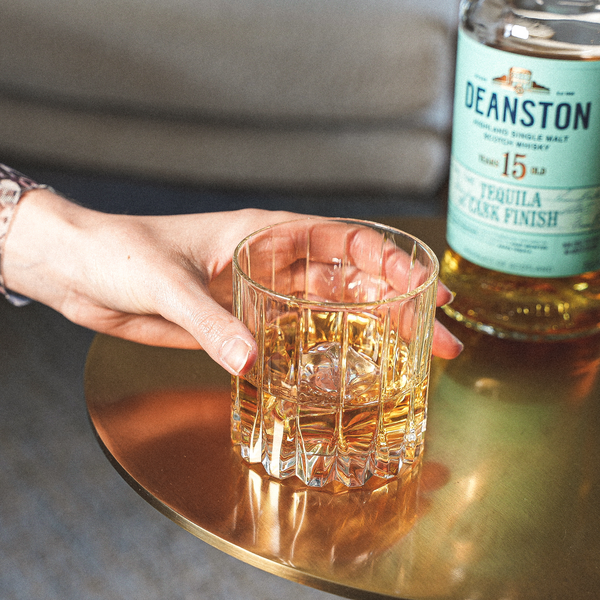
When enjoyed neat, waxy whiskies feel substantial and satisfying. Add water, and they tend to hold their structure rather than thinning out. Water can open up aroma and flavour while the mouthfeel remains intact, making waxy styles particularly well suited to slow, exploratory drinking.
.png?v=1768315275589&transform=resize=600)
IN LONGER SERVES OR COCKTAILS
In longer serves or cocktails, waxy textures helps whisky retain presence. Instead of disappearing beneath ice or mixers, the coating mouthfeel carries flavour through the drink, keeping it balanced rather than diluted. This makes waxy whisky especially effective in serves where structure matters as much as taste.
FINAL SIP
Waxy whisky isn't about chasing a flavour note - it's about paying attention to how a dram behaves, lingers and carries itself on the palate. That texture, shaped by production choices rather than shortcuts, gives certain whiskies a depth and versatility that rewards slow sipping and experimentation alike. One you start noticing mouthfeel, you'll find it changes how you taste everything that follows. And like all good whisky discoveries, the best way to understand waxiness is simply to pour a dram and see how it feels.
FAQS: WAXY WHISKY EXPLAINED
1. Is waxy whisky a flavour?
No. Waxy describes texture and mouthfeel, not a specific taste.
2. Are waxy whiskies always unchill-filtered?
Not always, but avoiding chill-filtration helps preserve the compounds that contribute to waxy character.
3. Does waxy mean heavy or strong?
Not necessarily. A whisky can be waxy without being high in alcohol or intense in flavour.
4. Can waxy whisky still be smooth?
Yes. Waxy whiskies can be smooth, with a rounded, coating feel rather than sharpness.
5. Is waxy whisky better for cocktails?
It can be. The added texture helps the whisky hold its own in longer serves without tasting thin.